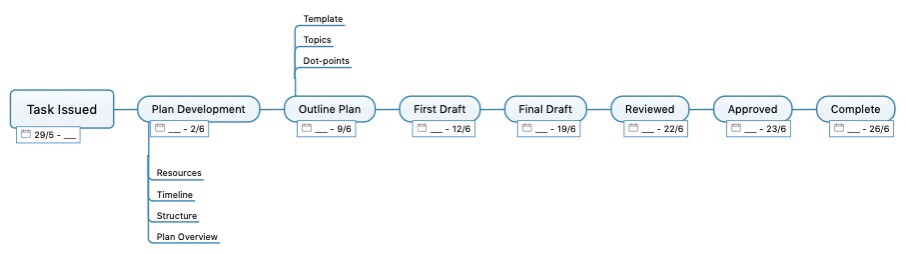
When most people start a task they jump straight in and commence the task. This gets the ball rolling and they start their research or even commence developing the product – especially if they have a template to use or something someone else has used previously which was successful. However, the downside of this is that they waste time doing the wrong things (or just spend too much time doing the preliminary setup and leave themselves short of time to do the important things – like finishing the product).
If you have done any project management then this concept won’t be new to you – plan to plan. That is, whenever you get a new task, plan to have a period when you will sit down and plan out the task. During this planning, you will need to undertake a bit of analysis about what the task is and the essential steps to get to the outcome. In this blog I’ll discuss three parts to this: allocating time to planning, setting objectives, and understanding the environment.
Allocate Time
When the task is first issued, set aside time to develop the plan. This could be immediately, or it could be later if there is a team involved and they need to be gathered. It will also give you time to prepare for the planning meeting by gathering important information. The important information includes:
- scope of the task – what are you required to look at
- considerations – are there any things which need to be taken into account
- timeframes – when is the task due and are there any milestones to be met (or do you have to develop these yourself – hint)
- assets and resources at your disposal
- the output from the task – what is your boss asking you for?
This should all be worked through and captured in a single document which you can refer to regularly to make sure you are on track to meet your deadline. At the very least a timeline is needed so that you know when certain milestones are due.
Set Objectives
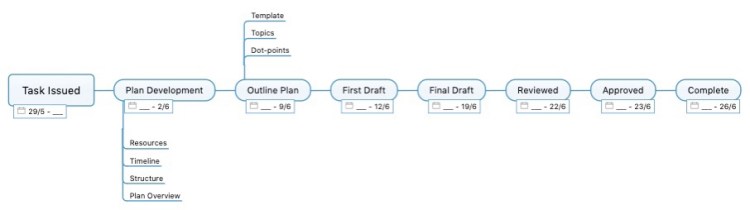
Objectives are the aim points along the plan toward which you are working to achieve the endstate – the finished product. In the above example timeline, some of the points are objectives, some are steps to achieve the objective. For example, a First Draft can be either an objective or a step toward the Final Draft. The complexity of the task will guide how many objectives there are in the plan. In a complex task, some objectives may not be along the same line but could come off as a branch line. However, all objectives should lead to the endstate. If an objective is off the main line as a branch, then there is a decision point where the branch occurs – it is a conscious decision to change to the branch.
Objectives, as steps toward the endstate, can be minor plans in their own right with certain elements to be achieved, or at least indicators so that you know when they have been achieved. Sometimes, objectives can be time-based or defined as part of the task (such as draft due for review or the availability of someone critical in the process), other times they are purely self-defined.
Setting objectives is an important step in the plan as they show you whether you are on track to achieve the task on time whilst giving it the proper attention it requires. The objectives allow you to maintain momentum with the task, which becomes more important when working as part of a team that relies on the work of others (including review) to develop the final product.
Understand the Environment
Understanding the environment means being aware of the surrounding influences which could have an impact your plan. This can be as detailed or as brief as you need it to be, but it should be relevant. Also, the environment in which you are planning for this task is going to be similar to the environment in which you are tackling other tasks (unless you are working for different groups with their own individual environment). Why this is beneficial is because if you define the environment that information can be used for multiple tasks – with a bit of tweaking and also regular review.
Things to consider when assessing your environment include:
- who you are with, how do they function best so you utilise their strengths
- what type of organisation are you working for, how rigid is it and how do they like things done
- what events are coming up on the calendar which may impact the task, including availability of key resources
- what are the risks to completing the task
- what facilities and infrastructure do you have access to, and will that support your work
- what IT do you have available to you and how competent are those you are working with at using it (not everyone needs to be IT-brilliant, but understanding how different your skills are to theirs is important).
What is the Output – the Task Plan
At the completion of the planning process you will need to capture the information in what should be described as a task plan. The task plan serves a few purposes, but three of them are more important than the rest:
- an outline to follow – what to do when
- a way to read back to the task initiator (your boss) what you are going to do
As a record for you to follow you will be able to check your progress and understand the impact or implications of any changes to the environment. You can compare it against your other task plans to identify any periods when your resources will be overwhelmed (including your own time). I will go into tracking your progress in more detail in a later article, but needless to say knowing if you are off track to meeting your key objectives early so you can divert resources is critical to meeting your task deadline (Hint: green is good, red is important).
After you have done your planning it is advantageous to brief back to the task initiator what you are going to do. This will confirm that you have understood the task and have taken into consideration any key factors and associated risks. This may also stimulate further guidance or questions which will ultimately inform a better product at the completion of the task.
Conclusion
What has been provided here are some ideas about planning a task. The time invested in undertaking the plan will pay dividends in structuring your task and allocating your resources to achieve the task on time and to the standard required.
Undertaking planning is important, but a waste if you don’t revisit the plan and update it regularly as you progress. Revisiting when there is a change in the environment will highlight risks and friction points, especially if you review it alongside your other tasks. Early intervention and adjustment will save a lot of rushing at the end and reduce your stress levels.
 Matthew Harvey
One thought on “Plan to Plan”